Back to News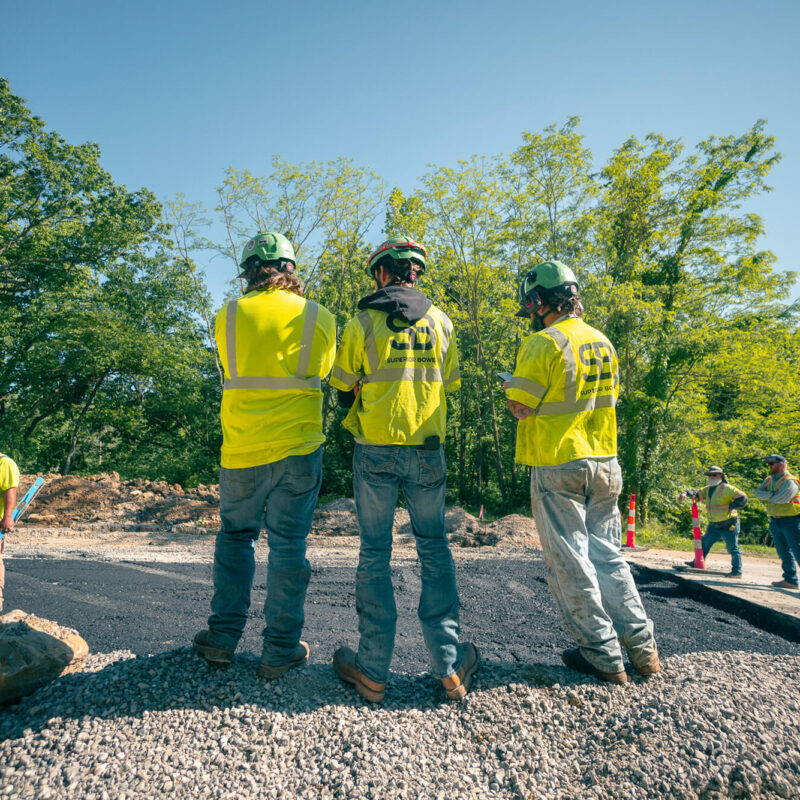
 Back to All News
Construction Union Jobs Explained
Superior Bowen is a union shop. From our operators to our laborers, the men and women you see on our sites are members of labor unions across the greater Kansas City area.
If you’ve never worked in the industry, you might wonder whether membership is something you should pursue (or if it’s within your reach as a newcomer).
We’ve got you covered.
Let’s dig into construction union jobs: what they are, which benefits to expect, and the four steps to securing one of these sought-after positions.
What Is a Union?
Unions, sometimes called labor unions or trade unions, are organizations made up of workers who bargain as a group to secure better benefits, safer jobsites, and higher wages. Typically, these groups are limited to people from the same — or similar — trades or industries. Many of America’s largest unions got their start during the Industrial Revolution. Today, there are more than 60 major unions throughout the United States.
Unions in Kansas City
Kansas City is home to multiple construction unions serving various trades, including:
- Operative Plasterers & Cement Masons (Local 518)
- Laborers’ Local 663
- LiUNA! Local 1290
- Teamsters (Local 541)
- Operating Engineers (Local 101)
Benefits of a Union Construction Job
Why should you hold out for a union construction job when there are so many nonunion placements available?
First, consider the big-picture benefits of union membership. In addition to collective bargaining power and enforceable contract, you’ll get access to roles at closed shops like Superior Bowen, where you can feel confident that working conditions are safe and fair. You’ll also benefit from steadier employment. Because the union is responsible for helping you to find placement, there’s someone to turn to when you need a new position.
Many people don’t know that union members receive fringe benefits you’d expect to see in full-time employment, such as:
- Health insurance
- Life insurance
- Short- and long-term disability
- Paid time off (PTO), vacation days, sick leave, and holidays
- Maternity and paternity leave
- Pre-tax pension contributions (retirement plans)
- Childcare and eldercare
Interested in these benefits? Before you can count on insurance coverage or a pension, you’ll need to become a member.
How To Join a Construction Union
Joining a union is easier than you might think. Here’s a rundown on the four-step process you’ll need to follow.
1. Research Your Union
Start the process by looking into all unions in your area. If you’ve never worked in construction before, take some time to educate yourself about each trade’s skills and responsibilities. Decide which group — and which role — feels like the right fit for you, based on your interests and abilities. Most unions have some form of online presence; take a look at their websites to get a better idea of which benefits they secure for members.
2. Check the Requirements
Take a look at the requirements listed on your union’s website. Typically, these will include basic prerequisites like:
- Proof that you are at least 18 years of age
- A high school diploma (or its equivalent)
- An active driver’s license and clean driving record
Unions may also request information about your qualifications, which may involve prior experience in specific skill areas or whether you hold an active commercial driver’s license (CDL).
Finally, they’ll ask you to confirm that you are physically capable of performing the tasks required for the trade.
3. Get Your Documents Together
Like any job, you’ll be expected to provide official documents related to your work authorization or citizenship, proof of identity, current licenses, and safety or role-related credentials. Go ahead and gather those so you’re not hunting for them on a time crunch.
4. Talk to a Union Representative
Finally, you’ll need to reach out to a representative of the union. Most will have contact buttons on their websites, while others will arrange to get in touch with you after the completion of a formal application. Work with your representative to gain access and begin the onboarding process.
Once you’ve followed these four steps, you’ll be a full-fledged member! Now you can get to know other folks at the hall and start knocking out your training requirements.
Union Training: What To Expect
Unions don’t place inexperienced workers right away — first, you’ll need to complete some training. In some organizations, this means safety courses and trade-related basics. In others, it’s a full-blown apprenticeship.
At Superior Bowen, we provide extensive supplemental training to our union team members. The reason? It’s right in our core values: if you’re going to be working on our projects, we want to give you every possible opportunity for continuous improvement.
How To Get a Union Construction Job
Once you’re a fully trained union member, you’ll be eligible for a union construction job at Superior Bowen. Many Kansas City unions operate through hiring halls. These organizations connect skilled workers with contractors who have entered a collective bargaining agreement and have open positions available.
Under this arrangement, the union determines which members meet eligibility requirements for a given role — if you make the cut, they’ll recommend you for the position.
Contractors can also request that certain high performers return for future projects: a process we call crew bring-backs. At Superior Bowen, we want to work with the best of the best. If you do a great job, we hope to see you again!
Union FAQs
What are the construction unions in Kansas City?
Kansas City is home to 217 total unions, several of which are specific to the construction industry. At Superior Bowen, we currently partner with five: Local 518, Local 663, Local 1290, Local 541, and Local 101.
Can anyone join a union?
Yes, provided that they meet that union’s qualifications! Usually, this means verifying their age, work authorization, and ability to physically perform the tasks associated with that trade. Every union’s requirements are different, so check with them to see what’s required.
What do labor unions accomplish?
Labor unions provide members with an enforceable contract, accountability from employers, and the ability to collectively bargain for improved working conditions.
What are the benefits of being in a union?
Unions provide members with formal benefits, including health and welfare coverage, pensions, and funds for advancement, apprenticeships, vacations, holidays, and training.
Superior Bowen: A Union Construction Company
Superior Bowen is powered by our union and full-time employees alike. Our leaders are proud to serve on the boards of labor-focused organizations like Local 101, the General Laborers Union Pension Fund, and the General Laborers Union Vacation Fund. If you’re considering a career in the trades, get in touch — we’ll point you in the right direction.
Sources
“Organized Labor Since the 19th Century: Construction Unions.” Library of Congress, guides.loc.gov/organized-labor/construction.