Back to News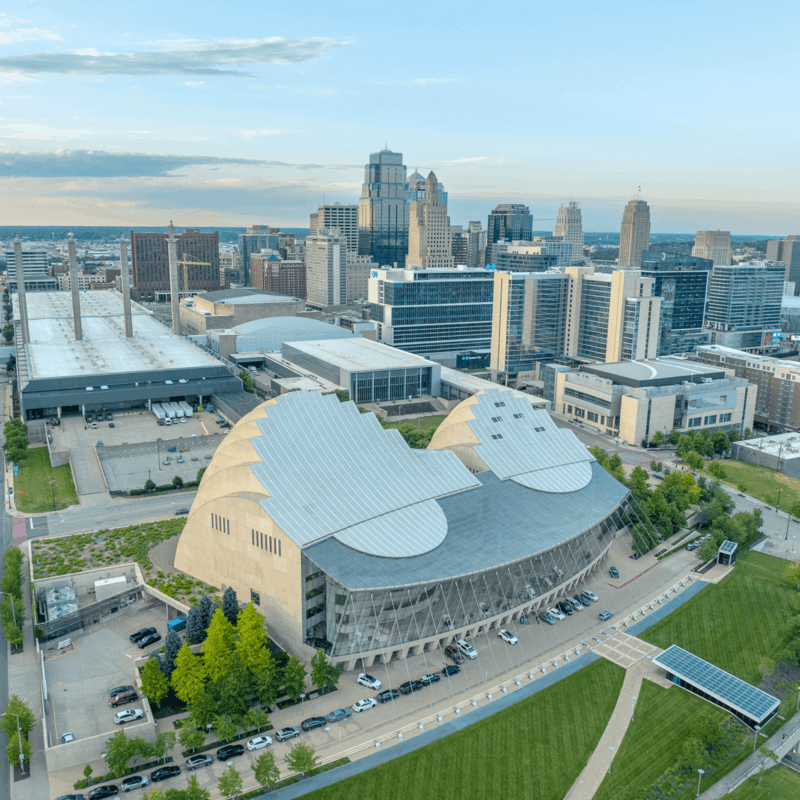
 Back to All News
The Crews Behind Kansas City Landmarks
Superior Bowen is proud to be based in Kansas City, Missouri. Since 1948, we’ve majorly transformed the landscape of our hometown — first as separate companies, and today united under one brand. From paving the way for Arrowhead Stadium to revitalizing the Liberty Memorial Tower, we’ve left our mark on KCMO.
Join us for a walk down memory lane as we explore some of our favorite historical projects.
Truman Sports Complex (1970–1972)
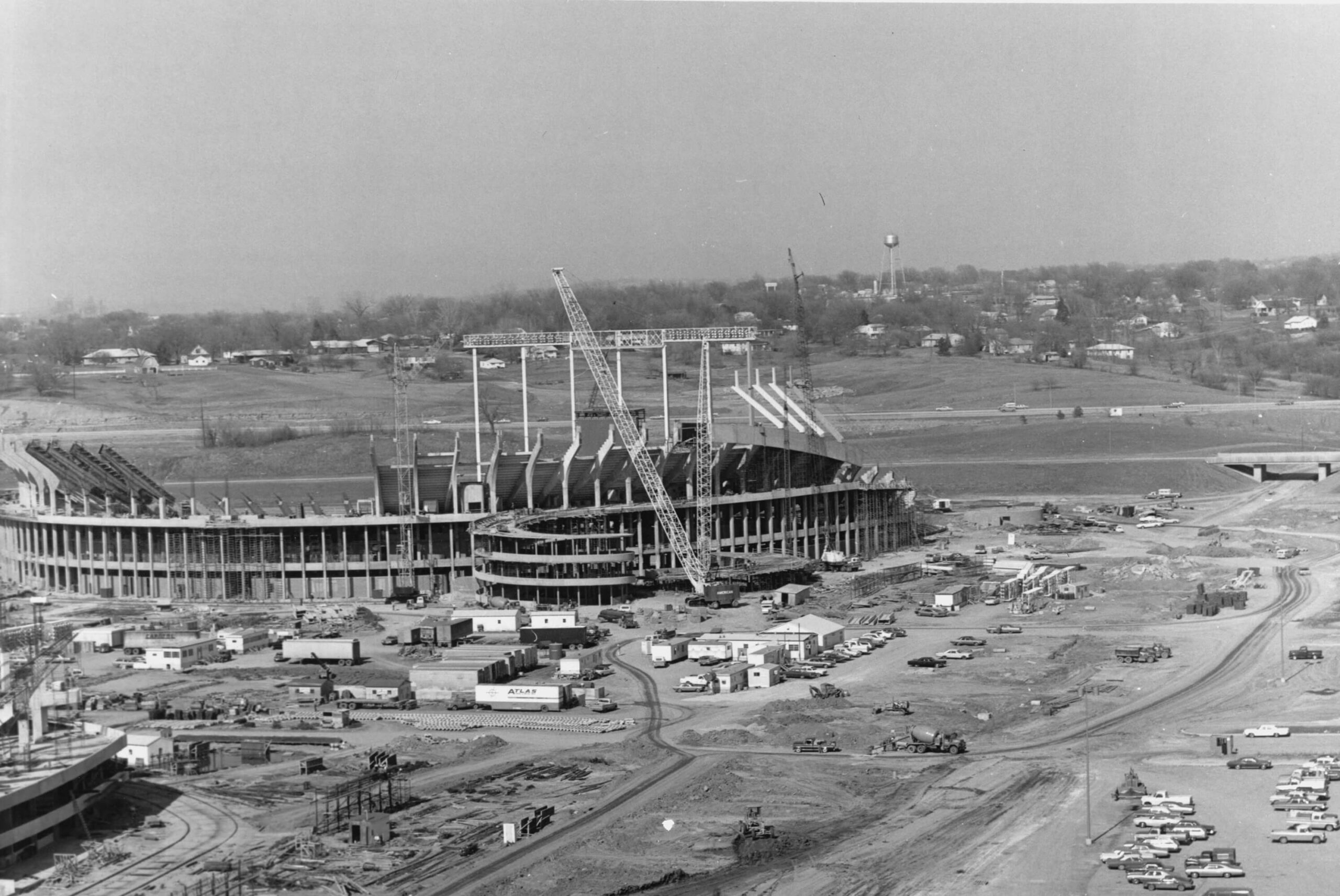
The Truman Sports Complex consists of two side-by-side stadiums built in the early 1970s by the government of Jackson County. Back then, Superior Bowen was still Bowen Construction Company. We were hired to build and pave large sections of the complex.
Bowen Construction crews corrected subgrade deficiencies and worked overtime to completely cover the playing field and parking lots with asphalt. That overtime circumvented major weather-related damage and delays, which would’ve set the project back and prevented the team from playing scheduled games in the spring.
After work concluded, Bowen Construction received letters lauding the quality of the project. Architect Kenneth O. von Achen sent a commendation on behalf of the Kansas City Royals. In it, he wrote, “The purpose of this letter is… to commend and congratulate each and every man of the Bowen Construction Company… Proof of an asphalt job well done, workmanship, materials and the meeting of requirements, in my opinion, is the test made by the 3M Company, in driving their 75,000 pound tank truck over all portions of the playing field looking for failures in asphalt and/or subgrade and finding NONE.”
Today, the Truman Sports Complex is home to two major league venues: GEHA Field at Arrowhead Stadium (home of the Kansas City Chiefs) and Kauffman Stadium (home of the Kansas City Royals). Every time we attend a game, we think back on the early days of Bowen Construction, and the legacy of “extreme care and diligence” left by our predecessors.
Richards Gebauer Air Force Base (1978)
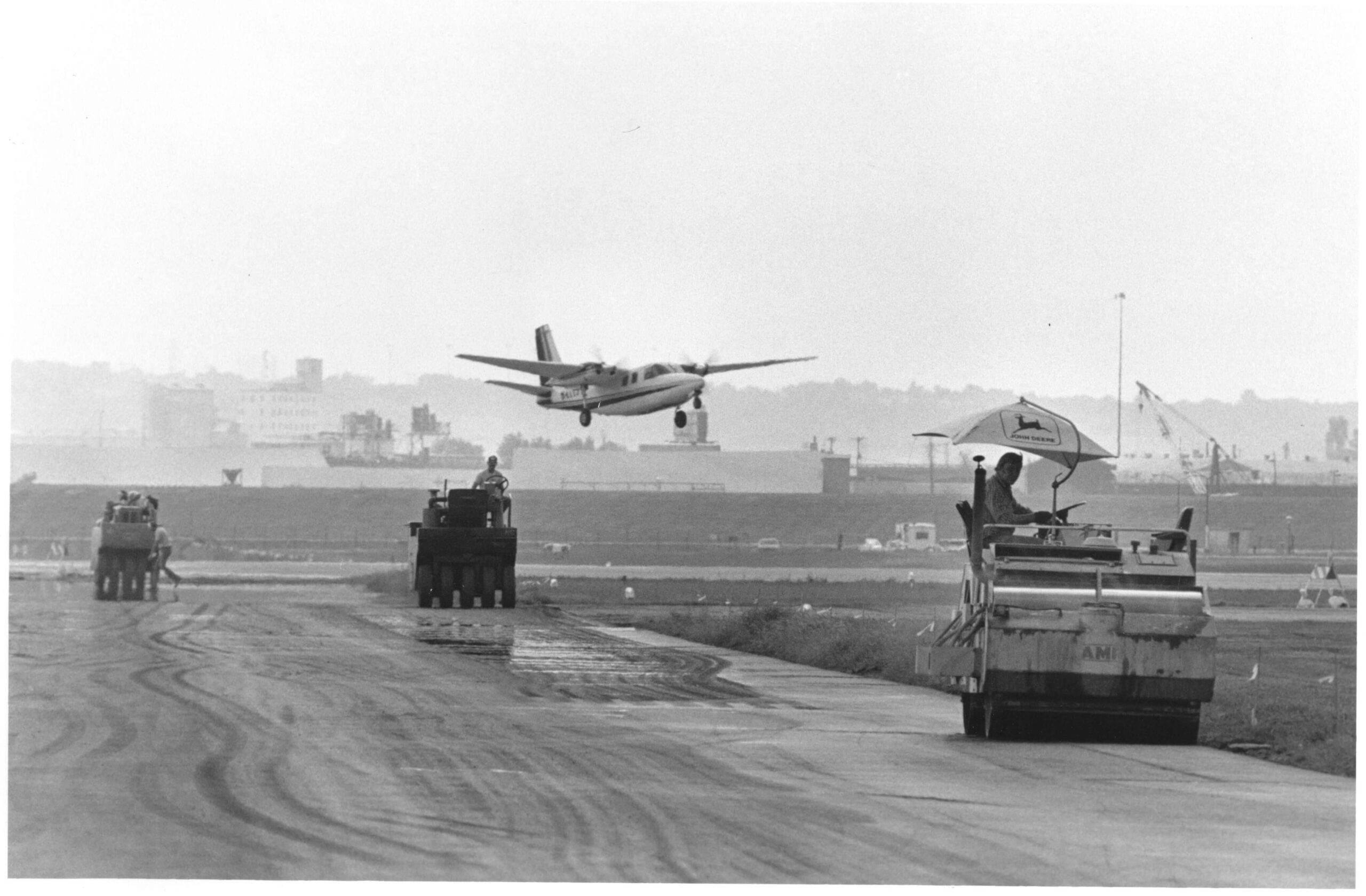
From its construction in 1941, the locals called this site the Grandview Airport. Upon its lease to the military, the airport was renamed to honor two Kansas City war heroes: John Francisco Richards II, a WWI pilot who served in the 1st Aero Squadron, and Arthur William Gebraur Jr., an F-84 jet fighter pilot who was killed in action during the Korean War. The Air Force began using the base to support nearby Sedalia Army Air Field during WWII. Through the Cold War, the base served as an interceptor hub, hosting F-86s and F-102s.
Superior Bowen (then Bowen Construction) was contracted to pave the Richard Gebauer Air Force Base’s runways in 1978. Once we finished the job, the base continued operations — it even developed a reputation for massive air shows, which drew crowds in the hundreds of thousands. While the base closed in the early 90s, its story continued. The land is being redeveloped into a major logistics hub; today, it’s the International Freight Gateway of CPKC Rail.
It’s hard to overstate the importance of Richard Gebauer Air Force Base. Its presence nearly doubled the population of nearby towns, as soldiers and their families began moving in. Their spending power stimulated the local economy, spurring entrepreneurs to found small businesses and services — many of which still exist today. We’re proud to have played a small role in the base’s legacy.
Meadowbrook Park (2016–2018)
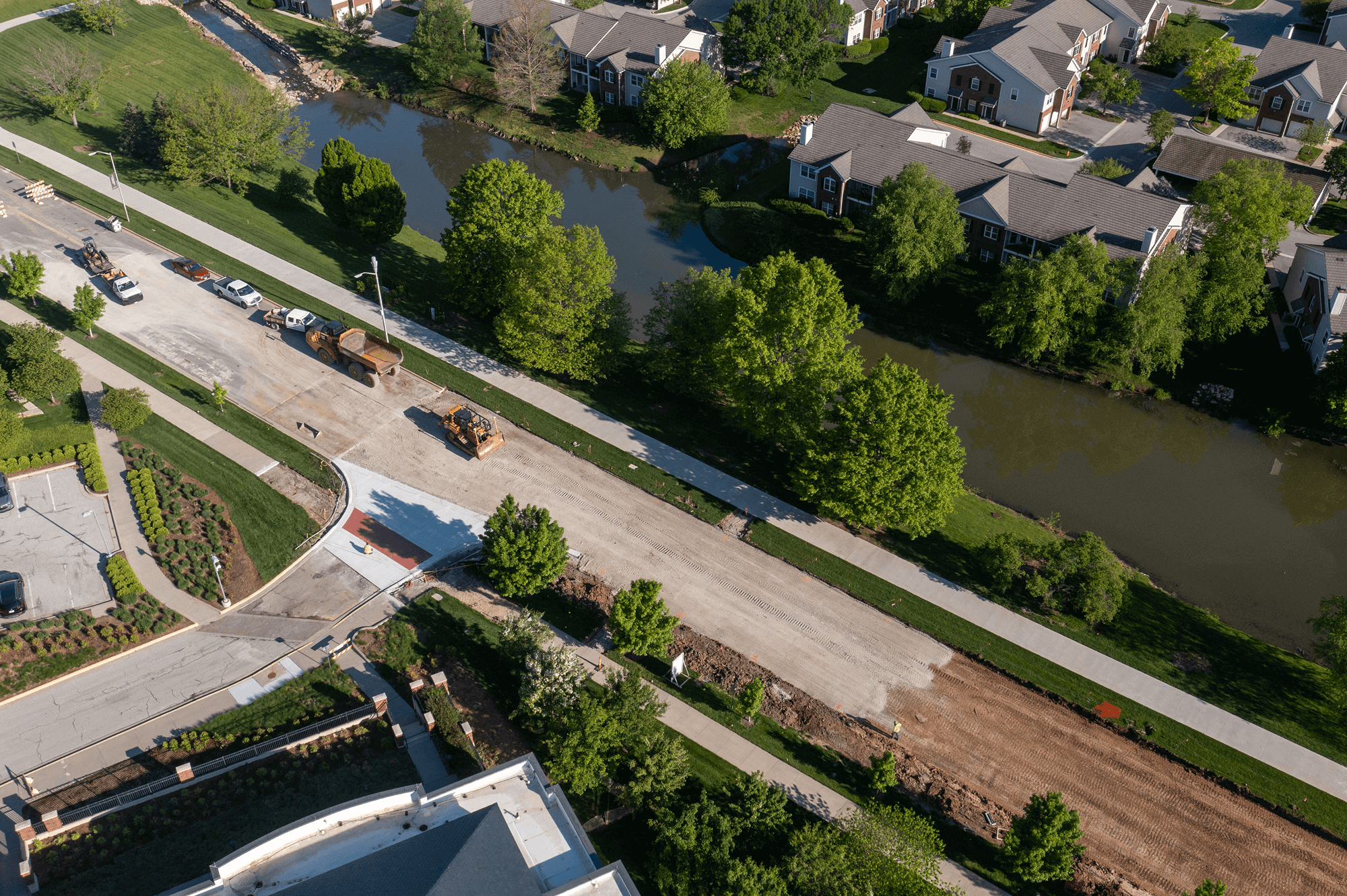
Kansas City has grown exponentially, and in the process, residents’ quality of life has increased, too. In 2016, Superior Bowen began work on Meadowbrook Park: an endeavor to transform a shuttered country club and private golf course into more than 80 acres of public parkland. VanTrust Real Estate asked us to get the site up to snuff before Johnson County Parks and Recreation could begin park construction.
Superior Bowen’s site preparation duties included mass grading and utilities installation. Once that was done, our team installed modular concrete bridges (CON/SPAN) and paved all roadways, parking areas, and multi-use trail connections throughout the redevelopment. (If you live at Kessler Apartments, you’ve seen our work!)
Ultimately, our efforts effectively doubled the City of Prairie Village’s park acreage at opening, giving residents plenty of space to explore, play, and enjoy easily accessible green space.
Bannister Federal Complex (2018–2021)
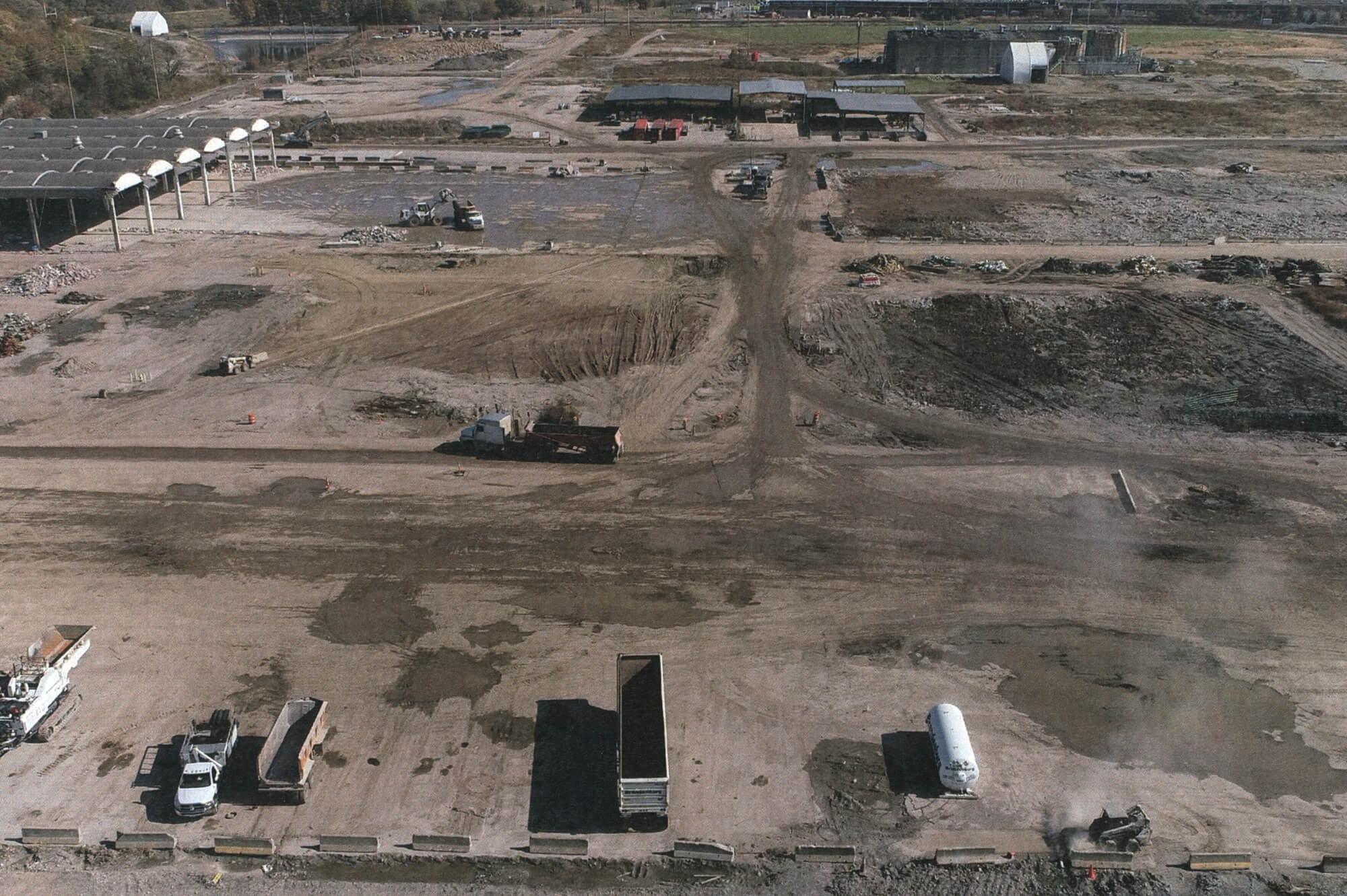
Superior Bowen was asked to flip one of the region’s most complex brownfields into productive industrial capacity. The site sits at the intersection of I-49 and Bannister Road, and it came with serious environmental baggage. It took years, but our team successfully remediated the existing issues. Our work catalyzed industrial development, revitalizing this forgotten corner of southern KC.
In the early 1920s, the site was home to the Kansas City Speedway — a wooden track that only lasted for two years before holes appeared in the untreated lumber used to build it. Senator Harry Truman repurposed the land for airplane engine manufacturing, and it later served as a Department of Defense landfill, Korean War airplane engine manufacturing, Honeywell non-nuclear weapon component production, and a hub of the Internal Revenue Service.
Perhaps unsurprisingly, environmental contamination began to cause health issues in workers who spent long periods of time on the site. Unsafe levels of chlorinated solvents, polychlorinated biphenyls (PCBs), hexavalent chromium, and petroleum were found. As a result, the government transferred 200 acres of the site to Bannister Transformation & Development LLC (BT&D) in 2017 for demolition, remediation, and redevelopment under the Resource Conservation and Recovery Act (RCRA).
That’s where Superior Bowen came in. Our multi-year demolition and cleanup efforts centered around heavy civil sitework. We performed mass grading, earthwork, and site preparation services to ready the area for the Blue River Commerce Center’s building pads and access roads. Today, this area in Southern Kansas City has been brought to life, thanks in part to new employment opportunities within the remediated Bannister development.
Liberty Memorial Tower (2021–2022)
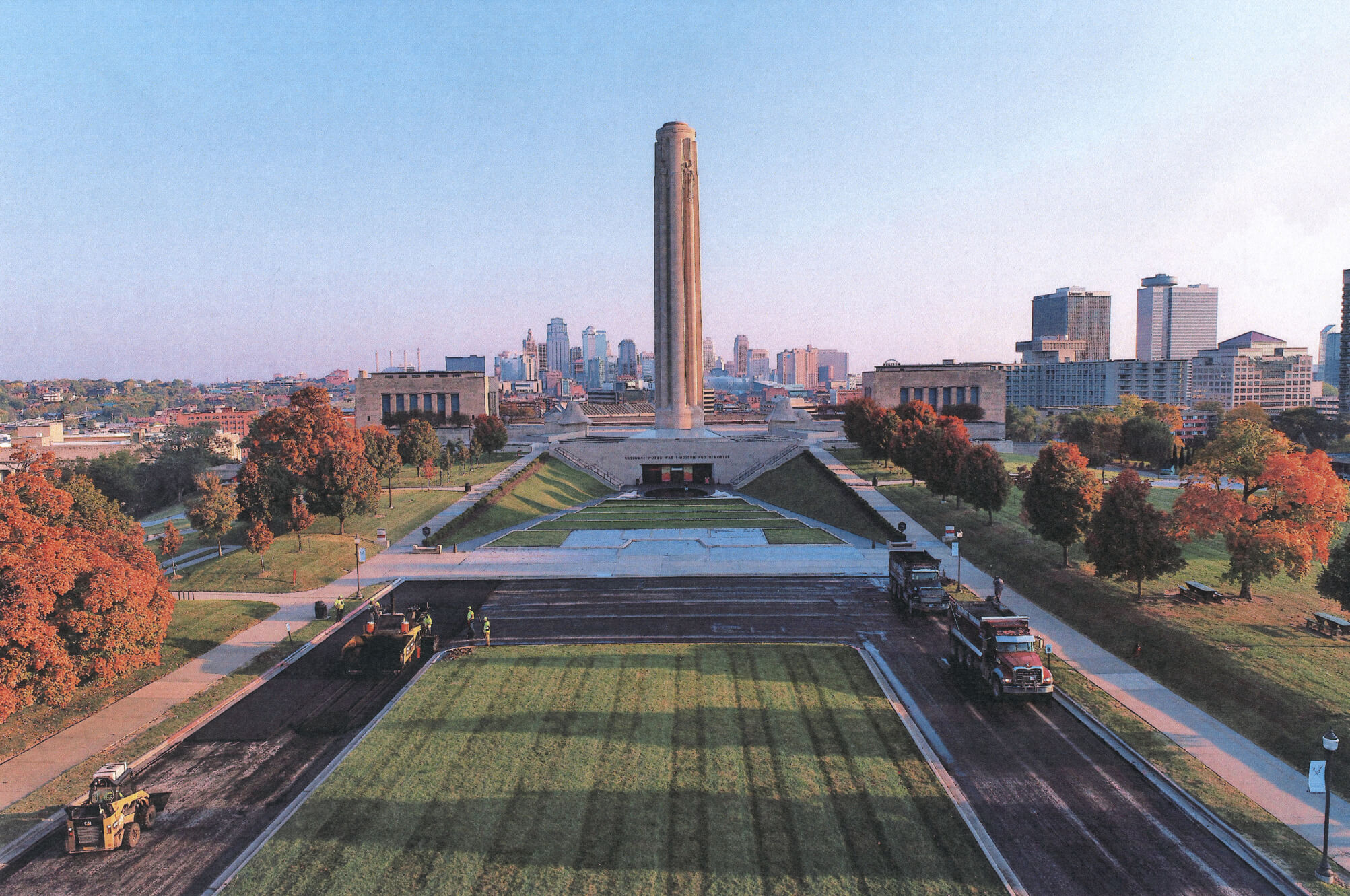
The Liberty Memorial Tower is a mainstay of the Kansas City skyline. Dedicated in 1926 and designed by Harold Van Buren Magonigle, this civic shrine honors those who served in World War I — in fact, it’s America’s only major monument and museum commemorating WWI.
In 2021, the KCMO Parks Department contracted Superior Bowen to further improve the site of the National WWI Museum and Memorial. We paved the horseshoe in front of the memorial itself, which completely transformed the site; now, it looks like it was just built! Our crews also patched and sealcoated the walking trail, which had degraded over decades of heavy tourist traffic. Today, it’s smooth, walkable, and accessible for visitors — a huge improvement for Kansas City tourists and locals alike.
Working on such a popular landmark came with its challenges. Our team needed to go the extra mile to manage traffic, which involved redirecting people away from wet sealcoat (while keeping them happy) and bringing large trucks down narrow walking paths. Shutting down the horseshoe for paving also presented an inconvenience for tourists, but everyone was happy to see the site being revitalized. We’re proud to have cared for such a quintessential piece of Kansas City history.
KCI Airport (2022)
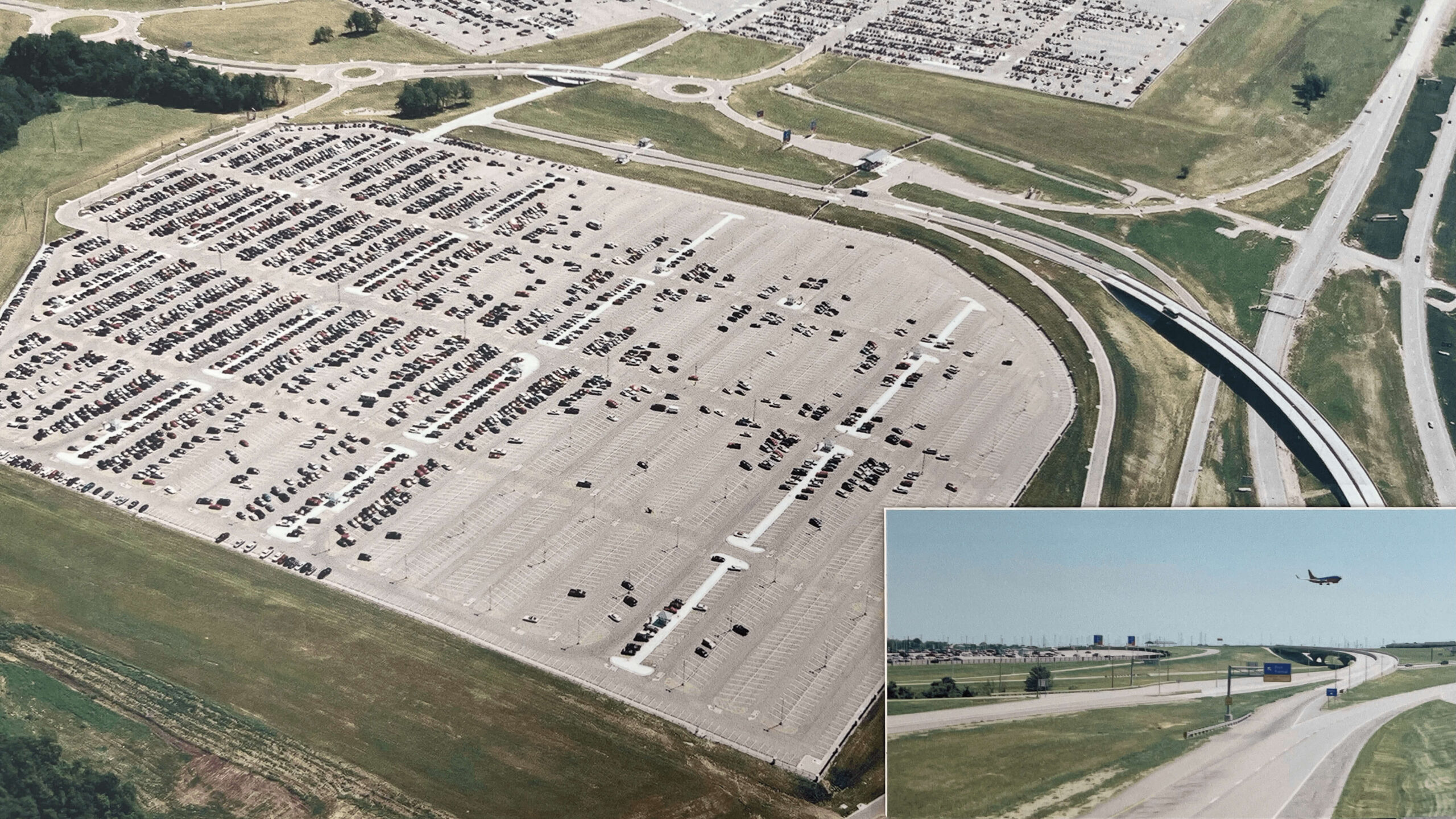
The Kansas City International Airport (KCI) was built after the Great Flood of 1951 destroyed major facilities at the Fairfax Municipal Airport. Officials opted to build north of the city, far from the Missouri River. They broke ground in 1954. In the years afterward, KCI became the “Airport of the Future,” primarily because the newer site was much better equipped to accommodate large jets than Kansas City’s downtown airport. It continued to grow along with the surrounding area.
In 2022, KCI was in the final phases of a major renovation, and a flood of visitors were about to pour through its gates — NASCAR planned to host a major race at the Kansas Speedway. The airport asked us to mill, resurface, and groove its pavement. We also needed to install new inground runway lighting.
Superior Bowen had just two weeks to complete our work once we began. We made it happen.
When it comes to large aircraft, smooth runways are a matter of safety. Paving them right takes innovation, especially on such an aggressive schedule. Our team eliminated longitudinal joints in the mat by using two pavers to tandem pave. This enormous job required 77,410 square yards of milling and 11,250 tons of FAA-P401 asphalt mix — at the height of the project, Superior Bowen dedicated 40 trucks to milling and paving.
Superior Bowen delivered on time with zero grinding and a very small punch list. The runway is still in excellent condition today; take a closer look at it the next time you fly out.
Looking to the Future
As 2025 comes to a close, the companies making up Superior Bowen prepare to enter their 78th year of building Kansas City. Looking back inspires us to set our sights on even more ambitious projects moving forward. One thing is certain: the future looks bright for Superior Bowen and the community we serve.
Contact our team for more information about past and future projects.
Sources
https://dnr.mo.gov/waste-recycling/sites-regulated-facilities/federal/former-bannister-complex